Who would not be fascinated to know what his life will be like in 15 years? Yet time will satisfy our curiosity about the future so slowly that we will never gain much pleasure from learning the outcome. To quench my curiosity now, I travel back in time instead of forward. My present life is the future secret that some self of a prior decade longed to look into, and now I know the outcome and need only recall the curiosity. I imagine myself in high school wondering whom I would marry, where I would live after college, and what my job would be, so that I can pull the curtain of time and flood my remembered ignorance with insight. My accurate and failed predictions equally fascinate me: I am, and am not, who I planned to be.
The mind is a phasic receptor, only noticing a sudden stimulus. We are unconscious of who we've become because we became who we are too gradually. Forgetting is a trick for remembering.
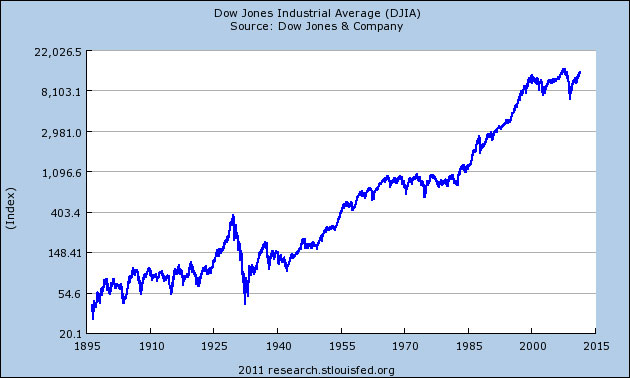 Looking at a long-term stock chart of the Dow Jones Industrial Average, I gain a sense of continuity across change. Decades of chaotic current events are condensed into an oscillating line. My finger follows the Great Crash of 1929, ascends with the post-war boom, zigzags through the recessions and oil crises of the 1970s, soars with the technology bubble then dives with the housing bust. Events that, in the moment, felt infinite because they took up all the space of the present, are in hindsight tick marks in the giant patterns of history. The traders who made the line rise and fall on the left of the chart have all lost their fortunes and entered the poorhouse of death. But greed and fear persist eternally, and now new traders move the line. Buying and selling for self, they plot a collaborative graph, as medieval masons added stones to cathedrals their ancestors started.
 Mr. Stanley’s Aphorisms and Paradoxes are outstanding examples of the long-form aphorism... inevitably studded with discrete individual aphorisms that could easily stand on their own.